What Happens to Tree Roots After Stump Grinding? An Albany NY Homeowner's Guide
After a tree is removed, the remaining stump can become an obstacle in a yard. Stump grinding is a popular way to address this problem, but many homeowners have an important question: what happens to the roots underneath the ground?
Understanding how stump grinding affects the root system can help Albany, New York homeowners make informed decisions about lawn restoration, landscaping, and future outdoor projects.
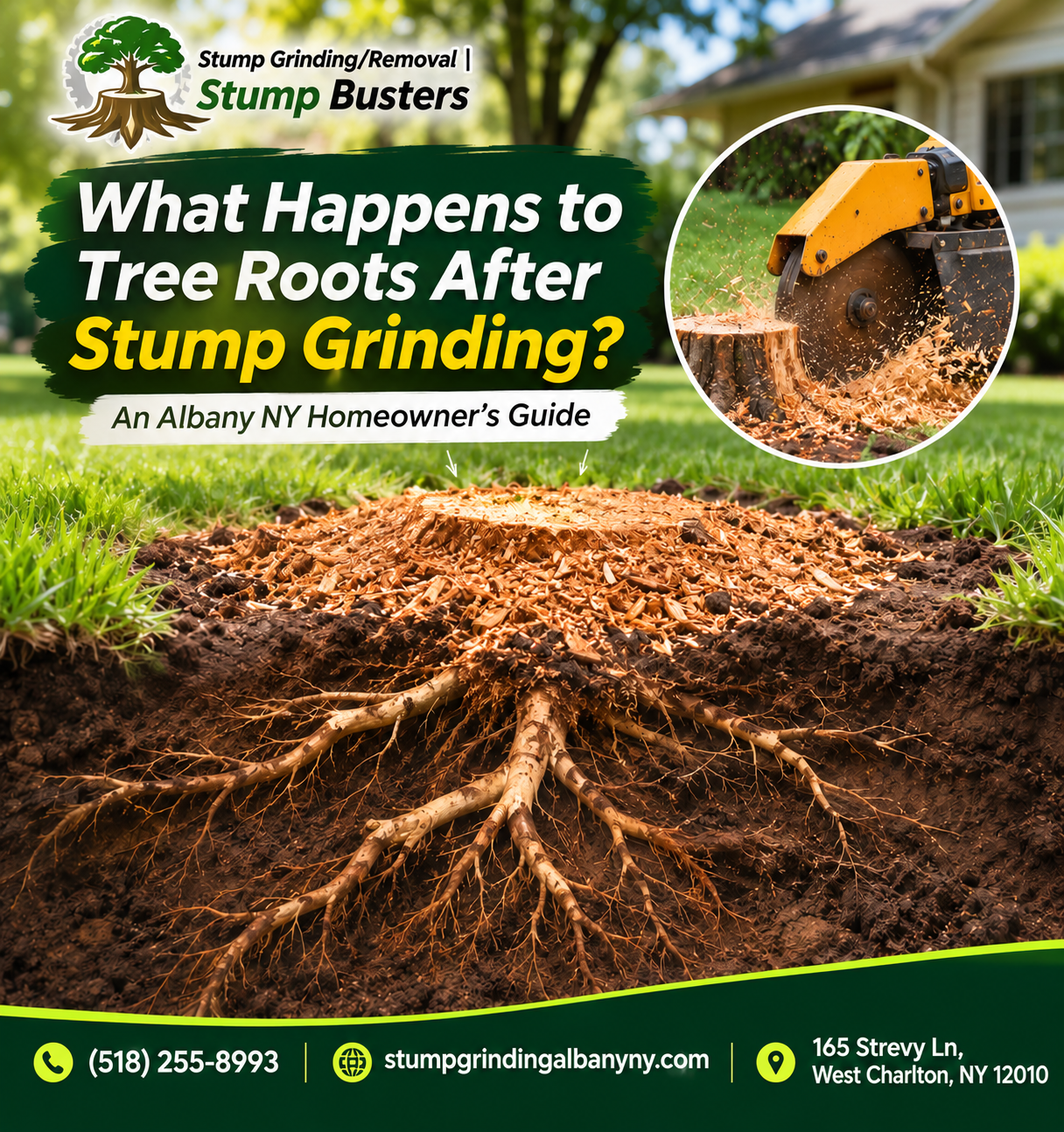
Does Stump Grinding Remove the Roots?
Stump grinding generally removes the visible stump and grinds it down below the surrounding ground level. However, the process usually leaves much of the underground root system in place.
The grinder uses a rotating cutting wheel to break the stump into small wood chips. Depending on the equipment and the agreed grinding depth, some larger roots close to the stump may also be reduced.
This is different from complete stump removal, which involves extracting the stump and a substantial portion of its roots.
For many homeowners who simply want to restore their lawns, grinding can be a practical solution without extensive excavation.
What Happens to the Roots Over Time?
After a tree has been cut down, the remaining roots typically begin a gradual decomposition process.
The speed of decomposition depends on several factors, including:
Tree species and root size
Soil moisture and temperature
Soil microorganisms
Drainage and surrounding conditions
Whether the tree is capable of producing new shoots
Large roots can remain underground for years before fully decomposing.
As the roots break down, they gradually become part of the surrounding soil's organic material.
However, homeowners should not expect the entire root system to disappear immediately after grinding.
Can Roots Continue Growing After Grinding?
In many cases, roots stop growing after the tree has been removed and the stump has been ground down.
However, certain tree species can produce new shoots from surviving roots or remaining living tissue.
These shoots are sometimes called root suckers.
If new growth appears, homeowners may need to monitor and manage it. The appropriate treatment depends on the tree species and whether living roots remain connected to other trees.
Stump grinding alone should not be assumed to prevent every form of regrowth.
Can Decaying Roots Cause the Ground to Settle?
Yes. As buried roots and woody material gradually decompose, small underground spaces can develop.
Over time, the soil above these areas may settle.
This is one reason homeowners sometimes notice minor depressions in areas where large trees or stumps were previously located.
If settling occurs, adding suitable topsoil and leveling the affected area can help maintain a smooth lawn surface.
The amount of settling varies depending on the size of the original root system and local soil conditions.
Is It Safe to Plant Grass Over a Ground Stump?
In many cases, homeowners can establish grass over a stump grinding location after preparing the area appropriately.
The process may include:
Removing excess wood chips from the grinding area.
Adding suitable topsoil.
Leveling the ground.
Selecting grass seed appropriate for Albany's climate.
Watering consistently during germination.
Monitoring the area for future settling.
Excessive wood chips can interfere with grass establishment, so preparing the soil is an important step.
Homeowners should also consider whether remaining woody material could affect the restored surface over time.
Can You Plant Another Tree in the Same Location?
Planting a new tree directly over an old stump location can be challenging.
Remaining roots, buried wood, and changes in soil structure may interfere with digging and root development.
The best approach depends on the size of the original tree, the grinding depth, and the intended replacement species.
In some cases, planting the new tree a suitable distance away from the original stump location may be more practical.
Consulting a qualified landscaping professional or arborist can help determine an appropriate planting location.
When Is Complete Root Removal Necessary?
Most lawn restoration projects do not require every old root to be removed.
However, more extensive excavation may be needed when preparing an area for certain construction projects, underground installations, or significant landscape changes.
For example, installing foundations or other structures may require removing buried woody material from the construction area.
Before beginning excavation, property owners should identify underground utilities and follow applicable safety requirements.
The appropriate approach depends on the project's design and site conditions.
Choosing a Stump Grinding Service in Albany NY
Before scheduling stump grinding, homeowners should explain how they plan to use the space afterward.
Ask about the grinding depth, wood chip cleanup, equipment access, and whether additional excavation may be necessary.
Homeowners seeking professional stump grinding in Albany NY can learn more about Stump Grinding/Removal | Stump Busters.
The business provides stump grinding and stump removal services in Albany and surrounding New York communities.
Final Thoughts
Stump grinding removes the visible stump but usually leaves much of the root system underground.
Those roots gradually decompose, and the surrounding soil may settle as the process continues.
Understanding these changes helps homeowners plan lawn restoration, future planting, and other landscaping improvements.
With appropriate preparation and maintenance, an old stump location can become a more useful part of the yard.
Business: Stump Grinding/Removal | Stump Busters
Website: https://stumpgrindingalbanyny.com/
Phone: (518) 255-8993
Service area: Albany, NY and surrounding areas