AI in STEM Education: Building Future-Ready Students in the UAE
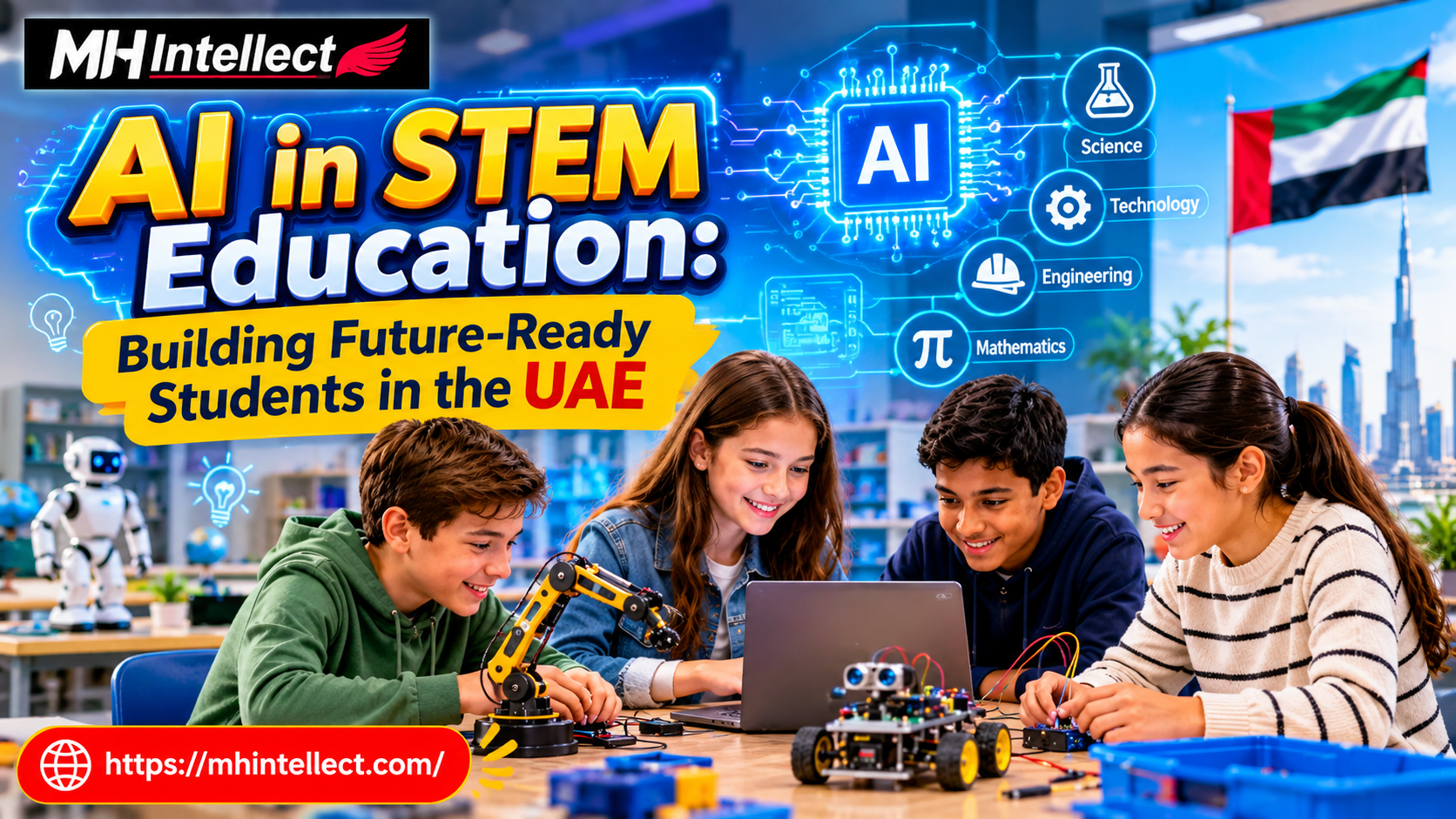
Technology is transforming the way students learn, explore, and solve problems. Artificial Intelligence (AI) is becoming an important part of modern education, creating opportunities for interactive learning, practical experimentation, and innovation. Integrating AI in STEM education helps students understand emerging technologies while developing essential skills for future careers.
The Growing Importance of AI STEM Education
STEM education combines Science, Technology, Engineering, and Mathematics to help students connect classroom knowledge with real-world applications. Introducing AI STEM education allows learners to explore how intelligent systems work and how artificial intelligence can solve everyday challenges.
Students can develop an understanding of machine learning, data analysis, automation, and computer programming through age-appropriate activities. These experiences encourage curiosity, logical thinking, creativity, and confidence in using technology.
How AI-Powered STEM Learning Transforms Classrooms
Traditional teaching methods are increasingly complemented by technology-driven learning experiences. AI-powered STEM introduces students to practical activities that combine artificial intelligence with robotics, coding, engineering, and scientific exploration.
For example, students can programme simple robotic systems, experiment with sensors, analyse information, and explore how machines recognise patterns. These activities make complex concepts easier to understand and encourage learners to apply their knowledge creatively.
The Role of AI Tools in Modern Education
Digital innovation has introduced several AI tools that can support teaching and learning. These tools can assist students with research, coding practice, data interpretation, simulations, and creative problem-solving.
When used responsibly under teacher guidance, AI tools can make lessons more interactive and provide additional opportunities for independent learning. Teachers can also introduce activities that help students understand the importance of data privacy, accuracy, digital responsibility, and ethical technology use.
How AI Transforms STEM Education
The way students approach science and technology is changing as artificial intelligence becomes more accessible. AI transforms STEM education by encouraging learners to move beyond memorising information and focus on experimentation, investigation, and practical application.
Students can explore how AI is used in healthcare, transportation, environmental monitoring, manufacturing, and smart technologies. Understanding these applications helps learners connect academic subjects with real-world challenges and potential career opportunities.
Encouraging Creativity Through AI-Powered Learning
AI-powered learning can support personalised educational experiences by providing interactive resources and activities suited to different learning needs. Students can explore concepts at their own pace, practise problem-solving, and receive additional support when working through challenging topics.
Combining AI with project-based learning also encourages collaboration, communication, critical thinking, and creative exploration. These skills are important for students preparing to participate in an increasingly technology-driven world.
Practical AI STEM Projects for Students
Hands-on activities are essential for helping students understand how artificial intelligence works. AI STEM projects provide opportunities to turn theoretical concepts into practical solutions.
Some engaging project ideas include:
Smart waste management: Build a model that uses sensors to identify waste levels.
Image recognition: Explore how computer systems identify and classify images.
AI-powered chatbots: Create simple chatbots that respond to basic questions.
Smart agriculture: Develop a model that uses sensors to monitor plant conditions.
Robotics and automation: Programme robots to perform simple tasks using sensor inputs.
These projects help students develop technical understanding while strengthening teamwork, creativity, and problem-solving abilities.
Preparing Future-Ready Students with MH Intellect
The UAE continues to emphasise innovation, technology, and future-focused education through initiatives such as UAE Vision 2031. Schools can contribute to these ambitions by providing students with meaningful opportunities to explore emerging technologies through structured STEM programmes.
MH Intellect supports schools in creating engaging learning experiences that combine technology, practical activities, and innovation. As a STEM Implementation Partner, MH Intellect helps schools introduce hands-on learning opportunities in areas such as robotics, coding, engineering, and artificial intelligence.
Schools and educators can also explore the Student's Gallery to discover examples of student creativity and practical STEM learning.
Conclusion
Artificial Intelligence is creating new opportunities for education by making STEM learning more interactive, practical, and innovative. By introducing AI tools, hands-on projects, and responsible technology practices, schools can help students develop the skills needed for future challenges. Integrating AI into STEM education today can inspire tomorrow's problem-solvers, innovators, and technology leaders.