How Proper Concrete Curing Improves Long-Term Performance
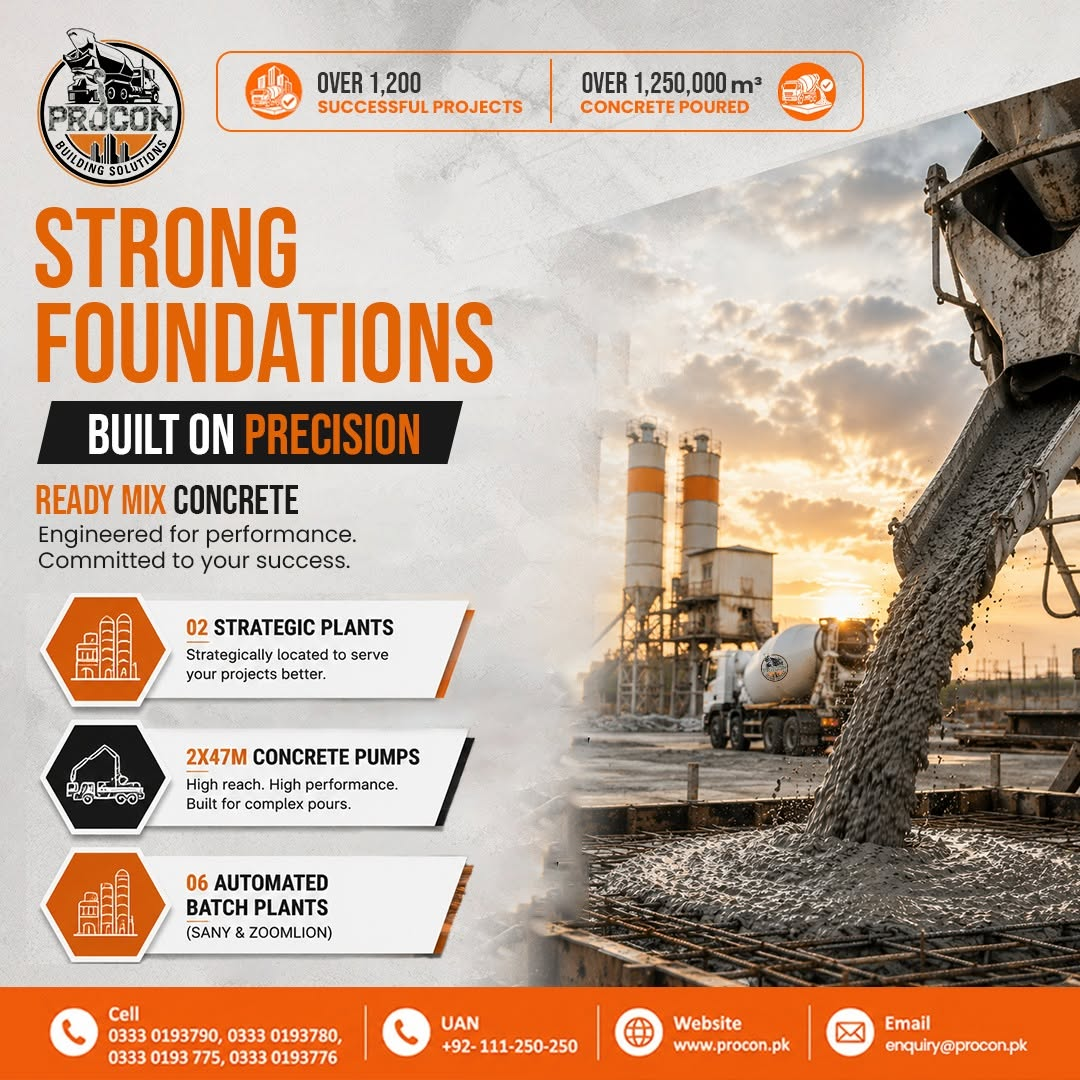
Concrete is the backbone of modern infrastructure, providing the structural foundation for high-rise buildings, bridges, highways, and industrial facilities. However, achieving design strength and maximum durability involves more than just mixing cement, water, and aggregates. The post-placement process—specifically curing—is what determines whether a structure reaches its full mechanical potential or succumbs to premature degradation. Curing retains moisture within the concrete matrix while maintaining favorable temperature conditions, ensuring complete hydration of the cement particles. For engineering projects across expanding urban centers, combining effective curing methods with high-grade ready mix concrete in Pakistan creates resilient, long-lasting structures.
1. Maximizing Compressive and Flexural Strength
The hydration process is a chemical reaction between cement and water that forms strength-giving calcium silicate hydrate (C-S-H) gels. If water evaporates too rapidly from fresh concrete, this chemical process stalls:
Complete Cement Hydration: Proper curing ensures continuous hydration, allowing concrete to achieve its full design compressive strength.
Higher Flexural Strength: Retaining internal moisture enhances the material's resistance to bending stresses, which is critical for suspended slabs and paving.
Reduced Surface Chalking: Maintaining surface moisture prevents the top layer from drying prematurely into a weak, dusty crust.
2. Preventing Shrinkage, Micro-Cracking, and Surface Spalling
Rapid moisture loss from the exposed surfaces of newly poured concrete leads to differential volume changes, creating internal tensile stresses that manifest as cracks:
Plastic Shrinkage Control: Curing immediately after finishing prevents rapid surface drying caused by solar heat and wind, eliminating early plastic shrinkage cracks.
Lower Permeability: A well-cured concrete matrix forms a tight, dense micro-structure, significantly reducing capillary pores through which water and harmful chemicals can seep.
Spalling Protection: Preventing micro-cracks shields the concrete surface from scaling, peeling, and spalling under heavy traffic and environmental weathering.
3. Enhancing Durability Against Harsh Environmental Factors
Structural longevity relies heavily on how well concrete withstands aggressive external conditions over decades of service:
Corrosion Resistance for Rebar: Low permeability prevents moisture, oxygen, and carbon dioxide from penetrating to the embedded steel reinforcement, averting rust and structural failure.
Sulfate and Chemical Defense: Dense, cured concrete offers superior resistance to groundwater sulfates, industrial chemicals, and coastal salinity.
Abrasion Resistance: Heavy-duty floors and pavements develop a hard, wear-resistant wear layer when kept moist during early strength gain.
4. Best Practices and Effective Curing Techniques
Selecting the appropriate curing method depends on project geometry, weather conditions, and site logistics:
Water Curing (Ponding and Spraying): Direct application of water provides optimal hydration for flatwork like slabs and pavements.
Membrane Curing Compounds: Liquid-applied chemical membranes seal in moisture, making them ideal for vertical columns, walls, and remote sites where continuous water supply is limited.
Curing Blankets and Plastic Sheeting: Covering fresh concrete traps evaporated moisture, maintaining a humid environment during extreme temperatures.
Conclusion
Curing is an indispensable step in the construction lifecycle that directly governs concrete's ultimate strength, durability, and life expectancy. Skipping or rushing this critical phase compromises structural integrity, leading to costly repair work, cracking, and premature structural failure. By combining strict curing protocols with precisely proportioned batching from trusted suppliers, engineers ensure their developments withstand severe environmental and mechanical demands. To explore technical mix specifications, high-performance formulations, and reliable batching solutions for upcoming structural projects, learn more about ready mix concrete in Pakistan today.
Survey No. 423, Ibrahim Hydri, behind Bol head quarter, Korangi creek road, Karachi-74900
+92 21 111 250 250