How Concrete Pumping Supports Large Construction Projects
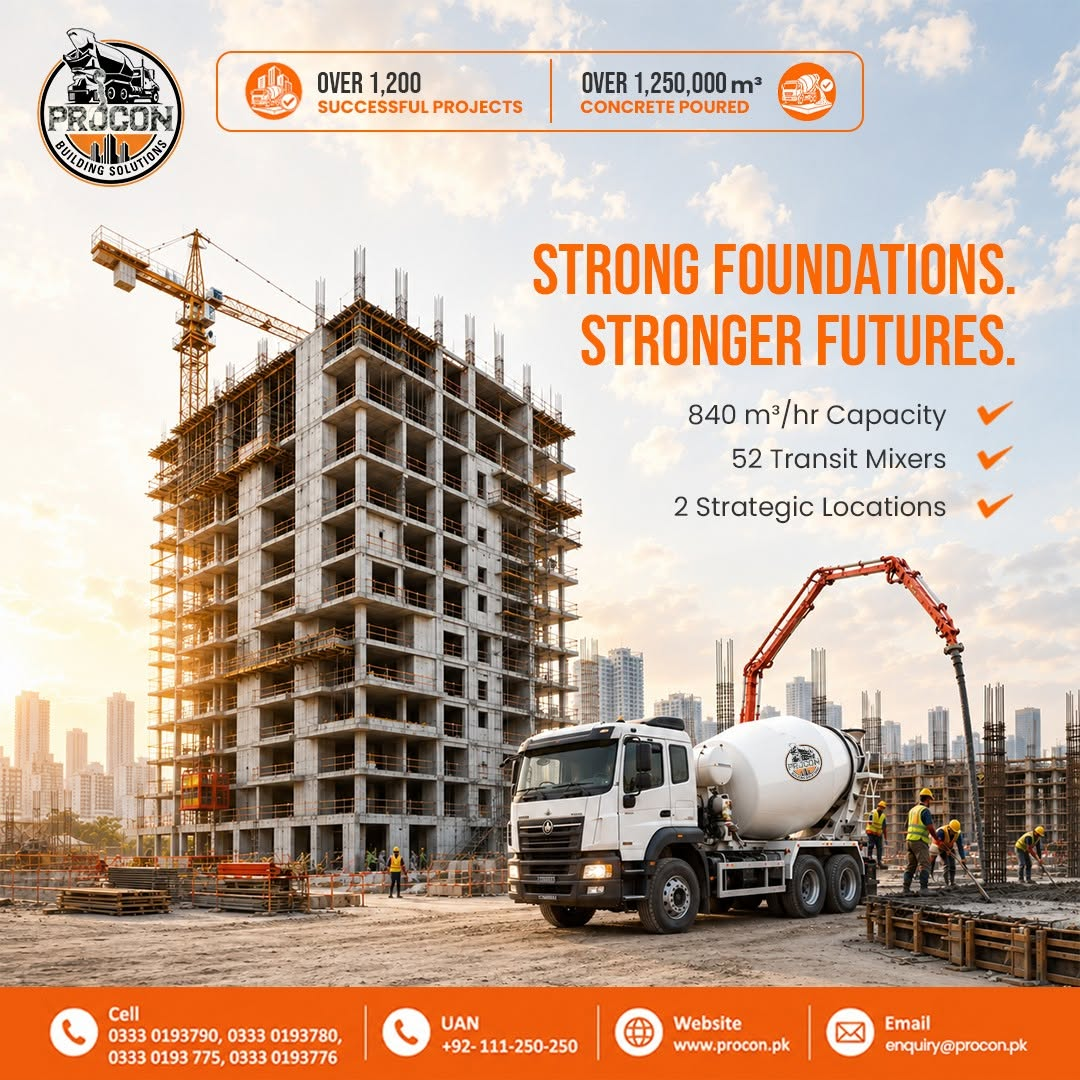
Executing large-scale construction projects—such as high-rise commercial towers, expansive industrial warehouses, and multi-story residential complexes—requires material handling solutions that combine speed, volume, and precision. Transporting thousands of tons of heavy material to elevated floors or deep subterranean foundations using traditional methods like cranes, hoists, or manual wheelbarrows creates severe labor bottlenecks and slows project timelines. Modern mechanical pumping technology has revolutionized site logistics, enabling continuous, high-volume placement. Sourcing custom-formulated, factory-batched ready made concrete Karachi developers depend on ensures that unhardened material maintains optimal flowability and consistency throughout high-pressure pumping operations.
The Challenges of High-Volume Concrete Placement
Large-scale developments present unique physical and operational hurdles during structural pours:
Vertical and Horizontal Distance: Moving material hundreds of feet upward or across wide slab footprints strains manual labor and traditional lifting gear.
Tight Placement Windows: Unhardened concrete must be placed and compacted before initial set occurs to prevent structural cold joints and internal voids.
Congested Site Footprints: Urban construction sites often lack space for multiple cranes or staging areas, requiring direct, streamlined delivery methods.
Key Advantages of Concrete Pumping in Major Projects
1. Rapid Placement Speed and Operational Efficiency
Mechanical pumping systems deliver an uninterrupted flow of unhardened material directly into formwork at rates exceeding 100 cubic meters per hour. High-capacity boom pumps extend articulated hydraulic arms over obstacles to reach elevated decks, while stationary line pumps convey material across extensive horizontal distances through pipeline networks. This continuous flow drastically reduces cycle times for casting floor slabs, shear walls, and massive foundation rafts.
2. Labor Optimization and Enhanced Site Safety
Manual transport requires large crews to push wheelbarrows, manage hoists, and shovel material, increasing site congestion and physical safety risks. Pumping automates material transport, allowing project managers to reallocate workforce personnel to shuttering alignment, rebar positioning, and precision surface finishing. Reducing site clutter and manual handling minimizes job-site accidents and streamlines overall operations.
3. Preserving Structural Integrity and Workability
Pumping requires carefully proportioned, highly cohesive concrete formulations. Custom mix designs incorporate high-range water reducers (superplasticizers) and well-graded aggregates that enhance slump and fluidity without adding excess water. Delivering cohesive concrete under hydraulic pressure ensures the paste fills tight formwork completely, coats dense steel rebar cages, and eliminates honeycomb voids, resulting in higher structural density and uniform compressive strength.
4. Overcoming Difficult Site Access
For projects situated in dense urban environments or restricted spaces where mixer trucks cannot drive adjacent to formwork, pumping offers the ideal solution. Transit mixers can unload at a central staging point away from the active pour zone, pumping material through flexible lines directly to remote or elevated structural elements without disrupting surrounding traffic.
Coordinating Batching Quality with Pump Operations
Successful pumping relies heavily on mix consistency. Fluctuations in aggregate moisture or uncalibrated water additions can cause segregation, leading to pipeline blockages and costly delays. Automated batching facilities utilize digital load cells and microwave sensors to produce pumpable mix designs with exact slump retention, ensuring smooth conveyance from transit mixer to final formwork.
Conclusion
Concrete pumping is an essential technology for modern large-scale construction, providing unmatched placement speed, labor efficiency, and structural accuracy. Automating material transport eliminates site bottlenecks, accelerates project completion schedules, and ensures dense, void-free structural elements. Sourcing high-performance, factory-tested materials through trusted suppliers of ready made concrete Karachi guarantees that high-volume pumping operations are executed with complete material accuracy, operational reliability, and lasting structural confidence.
Survey No. 423, Ibrahim Hydri, behind Bol head quarter, Korangi creek road, Karachi-74900
+92 21 111 250 250