Why Madurai Businesses Are Moving from Court Cases to ADR: A Practical Guide
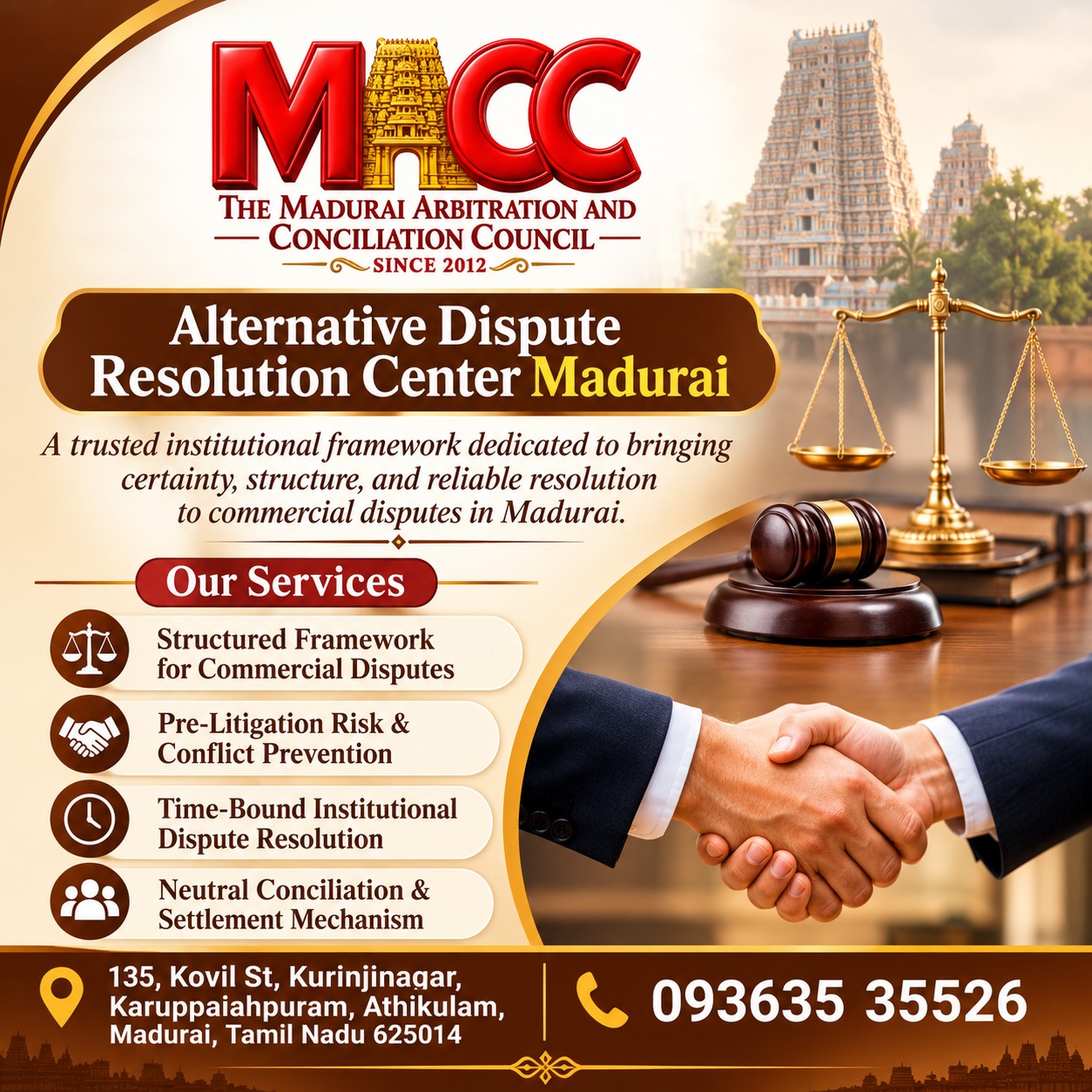
Every business, big or small, runs into a dispute at some point. It may be an unpaid invoice, a supply contract that went wrong, a partnership disagreement or a property matter. For years the only option people knew was the civil court, with its long hearings, repeated adjournments and rising legal costs. Today more owners and families are choosing Alternative Dispute Resolution Services Madurai because it settles matters faster, costs less and protects relationships that a courtroom fight would damage.
What Alternative Dispute Resolution Really Means
Alternative Dispute Resolution, usually called ADR, is a set of methods for settling disagreements outside the regular court system. A neutral third person helps the parties reach a solution, or decides the matter after hearing both sides. Institutions such as the Madurai Arbitration and Conciliation Council give people a structured, professional place to do this, with trained neutrals and clear procedural rules.
The legal framework in India supports this. The Arbitration and Conciliation Act recognises arbitration awards as enforceable, and courts regularly encourage parties to try settlement before litigation. ADR is no longer a side option. It has become a mainstream way of closing disputes.
Mediation, Conciliation and Arbitration: The Three Main Routes
Under Alternative Dispute Resolution Services Madurai, three main methods are used.
Mediation is a guided conversation. The mediator does not give a verdict. He or she helps both sides understand each other’s concerns and build their own agreement. It suits family business matters, neighbour issues and commercial relationships where both sides want to keep working together.
Conciliation is close to mediation, but the conciliator can actively suggest settlement terms. If the parties accept those terms, the settlement carries legal weight. It works well when the parties are stuck and need a practical proposal from a neutral expert.
Arbitration is the most formal route. The arbitrator hears evidence and arguments and then gives a binding decision called an award. It is common in contracts between companies, in construction and supply agreements, and in matters where a confidential and final answer is needed.
Why Madurai Businesses Prefer ADR
Madurai has a strong base of traders, manufacturers, textile units, educational institutions and service companies. Most of them cannot afford to have money and management time locked up in a case for years. This is where the Madurai Arbitration and Conciliation Council becomes useful. The main reasons businesses choose ADR are:
Speed: Many matters close in months, not years.
Lower cost: Fewer hearings and simpler procedure mean lower legal expenses.
Confidentiality: Business secrets and financial details stay private, unlike open court records.
Flexibility: The parties can choose the language, venue, timeline and even the neutral person.
Relationship preservation: A negotiated outcome leaves room for future business.
Disputes That Can Be Resolved Through ADR
Many people assume ADR is only for big corporate fights. In practice, Alternative Dispute Resolution Services Madurai cover a wide range of matters:
Payment and recovery disputes between buyers and suppliers
Breach of contract and service agreement issues
Partnership and shareholder disagreements
Construction, real estate and lease disputes
Franchise and distribution conflicts
Employment and vendor disagreements
Matters involving criminal offences or certain statutory rights are not suitable for ADR, so it is always wise to check the nature of the dispute first.
How the ADR Process Usually Works
The process is simple and easy to follow.
Agreement or reference: The parties either have an arbitration clause in their contract or agree to take the matter to ADR after the dispute arises.
Selection of the neutral: A mediator, conciliator or arbitrator is appointed with the consent of the parties or through the institution’s rules.
Submission of statements: Each side presents its claim, response and supporting documents.
Hearing or discussion: The neutral listens to both sides, asks questions and explores settlement.
Settlement or award: The matter ends with a signed settlement or a reasoned arbitral award.
A recognised institution such as the Madurai Arbitration and Conciliation Council keeps this procedure organised, so neither side has to worry about missed formalities.
How to Choose the Right Institution
Not every ADR provider offers the same level of quality. Before choosing, look at these points:
Experience and qualification of the panel of neutrals
Clear fee structure and published rules
Ability to handle both domestic and international matters
Facilities for physical and online hearings
Track record of timely disposal
Businesses searching for Alternative Dispute Resolution Services Madurai should also think about whether the institution understands local business practice. The Madurai Arbitration and Conciliation Council works with that local understanding along with professional dispute resolution standards.
Online Dispute Resolution Is Making It Easier
Online hearings have changed how disputes get resolved. Parties in Madurai, Chennai, Coimbatore or even abroad can submit documents electronically and attend hearings by video, without travel or long waiting time. This is especially helpful for small businesses and for contracts with overseas buyers. Modern Alternative Dispute Resolution Services Madurai increasingly combine in-person and online formats so that distance is no longer a barrier.
Add an ADR Clause Before a Dispute Starts
The cheapest dispute is the one you plan for. Adding a clear arbitration or mediation clause to your contracts, naming the institution, the seat of arbitration and the governing rules, avoids arguments later about how to resolve the matter. Business owners who want guidance on drafting such clauses or starting a case can reach the Madurai Arbitration and Conciliation Council for details on its procedures and services.
Final Thoughts
Court litigation will always have its place, but it should not be the automatic first step. For most commercial and civil disagreements, ADR offers a quicker, quieter and more affordable way to a lasting solution. Understanding mediation, conciliation and arbitration, and picking a credible institution, can save months of effort and a great deal of money.
Frequently Asked Questions
1. What is the difference between mediation, conciliation and arbitration?
Mediation helps the parties reach their own agreement with a neutral facilitator. Conciliation is similar, but the conciliator can propose settlement terms. Arbitration is a formal process where the arbitrator hears both sides and gives a binding award.
2. Is an arbitration award legally enforceable in India?
Yes. Under the Arbitration and Conciliation Act, a valid arbitral award can be enforced like a court decree, subject to the limited grounds on which an award can be challenged.
3. How long does ADR usually take compared to a court case?
It depends on the complexity of the dispute and the cooperation of the parties, but ADR is generally much faster. Many matters conclude in a few months, while court cases can run for years.
4. Can small businesses and individuals use ADR, or is it only for companies?
Both can use it. Individuals, families, startups, MSMEs and large corporates all use ADR for contract, payment, property and partnership disputes.
5. Do both parties have to agree to go for ADR?
Mediation and conciliation need the voluntary participation of both sides. Arbitration also needs consent, which is usually given in advance through an arbitration clause in the contract or later through a separate agreement.