Goods Lift in Coimbatore: Types, Capacity, Cost Factors & Buying Guide (2026)
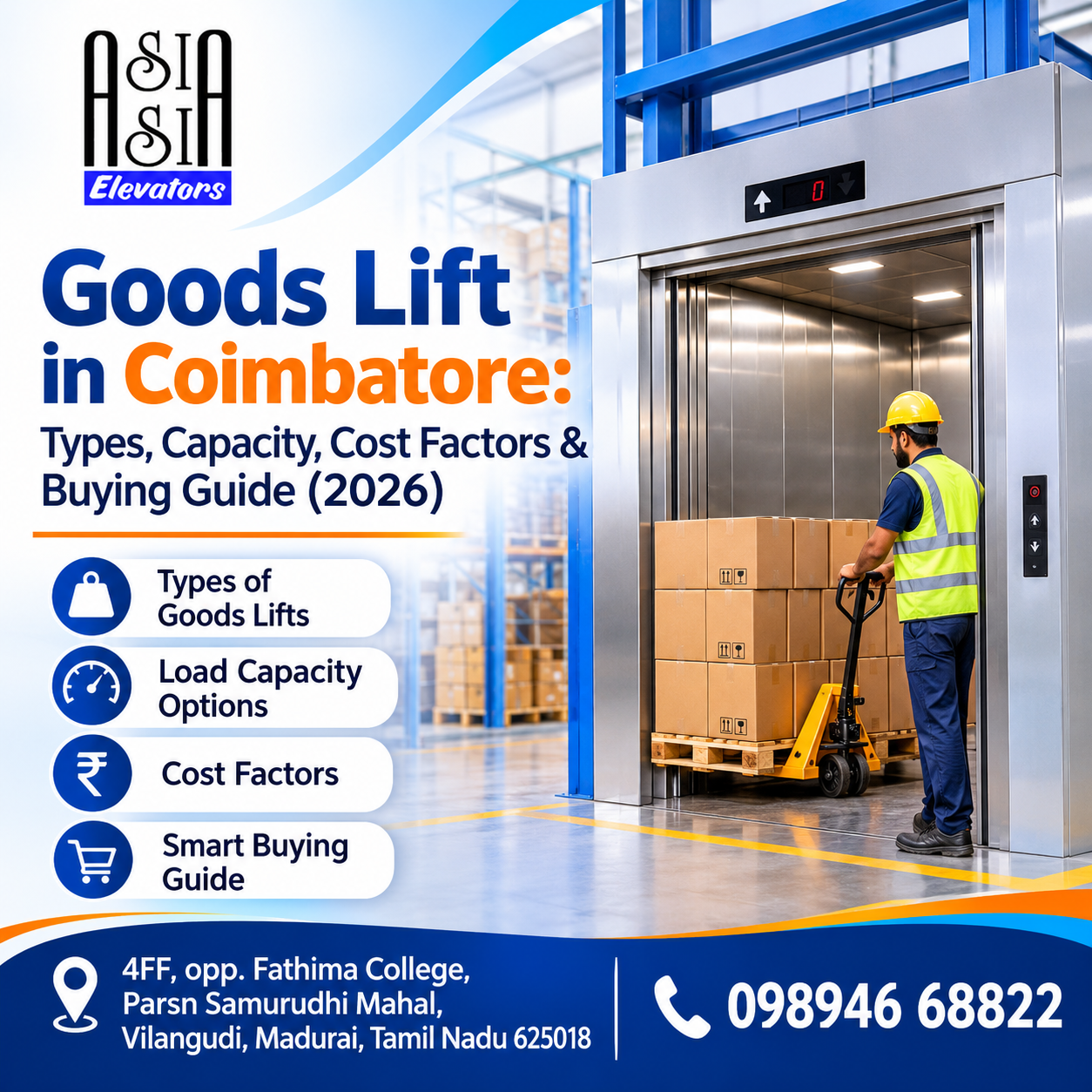
Coimbatore is often called the Manchester of South India, and its industrial base explains why. Textile mills, foundries, pump and motor manufacturers, engineering workshops, godowns and wholesale markets keep goods moving all day, in areas like Avinashi Road, Peelamedu, Kurichi, Ganapathy, Sulur and the SIDCO industrial estates. Carrying heavy loads by hand or through staircases wastes time, causes injuries and damages stock. A goods lift in Coimbatore solves this by moving materials safely between floors.
This guide covers the types of goods lifts, capacity, safety features, cost factors, installation and maintenance, so you can choose the right one. For help from a local team, you can speak to Asia Elevators.
What Is a Goods Lift?
A goods lift is a vertical transport system built to carry materials, machinery, packages and stock rather than passengers. Compared with a passenger lift, it has a stronger car, a higher load capacity, tougher flooring and a simpler interior designed for heavy use.
Where Are Goods Lifts Used in Coimbatore?
Textile and spinning mills: Moving yarn, fabric rolls and machine parts between floors
Manufacturing units and foundries: Carrying components, moulds and finished products
Warehouses and godowns: Shifting cartons, sacks and pallets
Wholesale shops and showrooms: Moving stock to storage floors
Hospitals and hotels: Transporting linen, equipment, food and supplies
Commercial complexes and malls: Back-end movement of goods
Cold storage and food processing units: Handling perishables with hygienic car finishes
Types of Goods Lifts
1. Hydraulic Goods Lift
Uses a hydraulic piston and pump to raise the car. It works well for low-rise buildings and heavy loads and needs little overhead space.
2. Traction (Electric) Goods Lift
Uses ropes and a counterweight driven by an electric motor. It suits taller buildings and gives faster, smoother travel.
3. Machine Room-Less (MRL) Goods Lift
Places the machine inside the shaft, saving building space. It is useful where a separate machine room is not possible.
4. Hydraulic Platform Lift
A simple open platform lift for lower floors, loading docks and short vertical movement.
5. Hand-Operated or Service Lift
A compact lift for lightweight items, commonly used in restaurants, hotels and small shops.
6. Car Elevators and Heavy-Duty Lifts
Built for vehicles or very heavy industrial loads, designed on a custom basis.
Key Benefits of Installing a Goods Lift
Higher productivity: Goods move quickly, so loading and unloading take less time.
Fewer injuries: Workers no longer carry heavy loads up stairs.
Less damage to goods: Smooth, controlled movement protects stock and machinery.
Lower labour cost: Fewer people are needed for material handling.
Better space use: You can use upper floors for storage and operations.
Business growth: Smoother logistics let you handle higher volumes.
Important Specifications to Consider
Load capacity: Base it on your heaviest regular load, with a safety margin.
Car size: It should be large enough for pallets, trolleys or machines.
Number of floors and travel height: This affects the lift type and motor choice.
Speed: Slower for heavy loads, faster for high-frequency movement.
Door type: Manual, automatic, collapsible, vertical bi-parting or swing.
Car material: Mild steel, stainless steel or chequered plate flooring.
Power supply: Check whether single-phase or three-phase power is available.
Safety Features to Look For
Overload protection and load-limiting devices
Emergency stop and alarm system
Door interlocks, so the lift runs only when doors are closed
Safety gear or governor (in traction lifts)
Pipe rupture or rupture valve (in hydraulic lifts)
Emergency lowering for power failures
Limit switches to prevent over-travel
Proper lighting and signage inside and near the lift
Lift installations are subject to Indian standards and state regulations. Confirm the applicable approvals, inspection and licence requirements before commissioning.
Space and Civil Requirements
Before you install a goods lift, check:
Shaft or pit size: Based on car size and lift type
Pit depth and overhead clearance: Required for most lift designs
Machine room: Needed for traction lifts, but not for MRL designs
Floor strength: The structure must support the extra load
Loading area: Enough room for trolleys and pallets at each stop
Electrical connection: Proper wiring and earthing
An experienced provider will inspect your site before recommending a design.
What Affects the Cost of a Goods Lift in Coimbatore?
Prices vary widely depending on your needs. The main factors are:
Type of lift (hydraulic, traction or MRL)
Load capacity and car size
Number of floors and travel height
Door type and car finish
Brand and quality of components such as motor, controller and ropes
Civil work required for the shaft and pit
Customisation, such as special cabin sizes or heavy-duty flooring
Installation complexity and site conditions
Annual maintenance contract (AMC) terms
Always ask for a written quotation that lists exactly what is included, so you can compare offers fairly.
How to Choose the Right Goods Lift Supplier
Your lift will run for many years, so the supplier matters as much as the machine. Check these points:
Experience in industrial lifts: Ask for similar projects completed in Coimbatore and nearby areas
Site inspection and design support: A good supplier customises the lift to your building
Quality of components: Ask about motors, controllers, safety gear and door systems
Compliance: Make sure the lift meets applicable standards and approvals
After-sales service: Local, quick service matters because a breakdown stops your operations
Clear AMC plan: Know what is covered, how often service visits happen and the response time
Transparent quotation: No hidden charges for civil work, electrical work or inspection
You can compare options for a goods lift in Coimbatore with a team that offers site assessment, installation and maintenance support under one roof.
Goods Lift Installation Process
Requirement discussion: Share your load, floors, usage and space details.
Site survey: The team measures the shaft, pit, headroom and access.
Design and quotation: You receive a proposal with specifications and cost.
Civil and electrical preparation: Shaft, pit and power supply are made ready.
Manufacturing and delivery: Components are produced or supplied to the agreed design.
Installation: Guide rails, car, doors, drive system and controls are fitted.
Testing and commissioning: Load tests and safety checks are carried out.
Handover and training: Your staff learn safe operation and basic precautions.
Maintenance Tips for a Long-Lasting Goods Lift
Take up an annual maintenance contract with scheduled service visits
Never exceed the rated load
Keep the car, doors and landing areas clean
Report unusual noise, jerks or slow door movement immediately
Lubricate and inspect moving parts regularly, as advised by your service team
Check door interlocks and emergency systems periodically
Train operators and loading staff in safe practices
Keep a log of services and repairs
Common Mistakes to Avoid
Choosing capacity too close to the actual load. Always plan for future growth.
Picking the lowest price. Weak components cost more in repairs later.
Ignoring civil requirements. Poor shaft planning can delay the project.
Skipping the AMC. Without regular service, breakdowns become more frequent.
Overloading the lift. This damages the motor, ropes and safety systems.
Not checking after-sales support. A quick local response is essential for businesses that run daily.
Conclusion
A well-chosen goods lift improves speed, safety and efficiency in factories, warehouses, shops and hospitals. The right lift depends on your load, building, usage and budget, so planning and supplier selection matter. For a trusted goods lift in Coimbatore, work with a provider that offers site inspection, quality components, proper installation and dependable service. You can contact Asia Elevators for guidance, and you can check their location and customer feedback on their Google Business Profile. If you are planning a new project, a trusted goods lift in Coimbatore can help you move ahead with confidence. For more details on elevator solutions, visit Asia Elevators.
Frequently Asked Questions (FAQs)
1. What is the difference between a goods lift and a passenger lift?
A goods lift is designed to carry materials and heavy loads, so it has a stronger car, tougher flooring and higher capacity. A passenger lift focuses on comfort, appearance and people's safety.
2. Which type of goods lift is best for factories and warehouses?
Hydraulic goods lifts suit low-rise buildings and heavy loads. Traction lifts are better for taller buildings that need higher speed. The best choice depends on your load, number of floors and available space.
3. How much load can a goods lift carry?
Capacity varies from a few hundred kilograms to several tonnes. Choose a capacity based on your heaviest regular load, with a margin for future needs.
4. How long does it take to install a goods lift?
The timeline depends on the lift type, shaft readiness and customisation. Civil work, manufacturing and installation all add up, so ask your supplier for a project schedule after the site survey.
5. Is an annual maintenance contract (AMC) necessary for a goods lift?
Yes. Regular servicing keeps the lift safe, reduces breakdowns and extends its life. Check what the AMC covers, how often visits happen and how quickly the team responds to faults.