Buffalo Winter Storm Tree Safety: What Homeowners Should Do Before and After Heavy Snow
Buffalo, New York, is known for harsh winters, lake-effect snow, freezing temperatures, and powerful storms. These conditions can place significant pressure on trees, especially when heavy snow and ice accumulate on branches.
For homeowners, understanding how to prepare trees before a storm and what to check afterward can help reduce potential hazards.
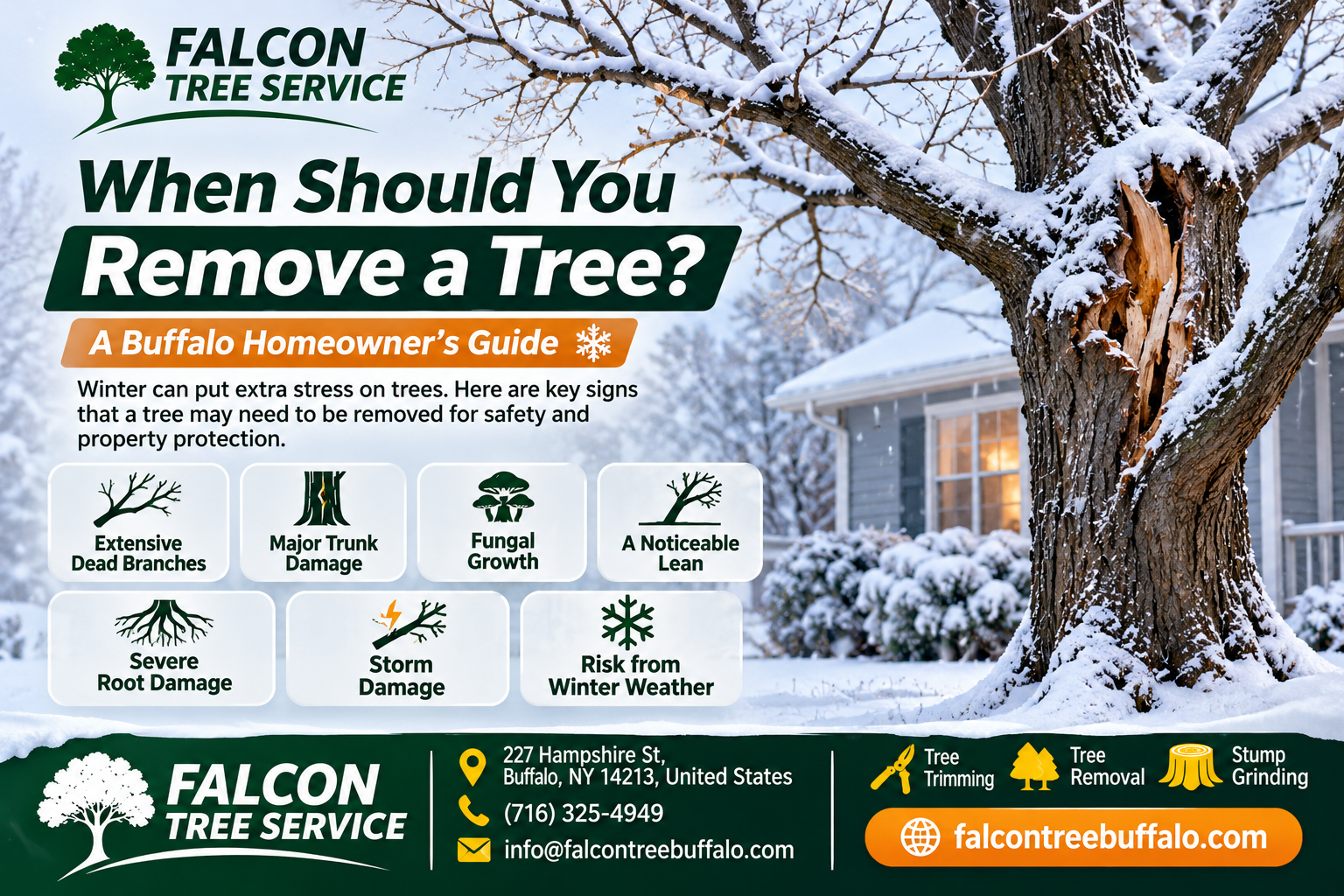
Here is a practical winter storm tree safety guide for Buffalo residents.
1. Inspect Your Trees Before Winter Storms Arrive
One of the most useful preventive measures is checking trees for visible structural problems before severe weather.
Look for warning signs such as:
Dead or hanging branches
Cracks in major limbs or the trunk
Large branches extending over roofs or driveways
Fungal growth near the base of a tree
Newly exposed roots or changes in the tree's position
Weak branch connections
These signs do not always mean a tree must be removed, but they may indicate that professional inspection is necessary.
Homeowners looking for tree services in Buffalo, NY can contact Falcon Tree Service to discuss tree maintenance and potential hazards.
2. Understand Why Heavy Snow Can Damage Trees
Snow may appear light when falling, but accumulated wet snow can become extremely heavy.
When snow and ice collect on branches, the added weight increases stress on the tree's structure.
Trees with existing defects may be particularly vulnerable.
Common types of winter damage include broken limbs, split branches, bent young trees, and damage caused by falling branches.
Some evergreen trees can also experience significant snow accumulation because their foliage remains throughout winter.
Regular maintenance and appropriate pruning can help address certain weaknesses before storms occur.
3. Keep Trees Away From Important Structures
Trees growing near buildings, garages, fences, and driveways deserve additional attention.
Overhanging branches can create potential hazards when weakened by snow, ice, or strong winds.
Before winter, examine trees around frequently used areas of your property.
If a large branch appears damaged or unstable, avoid attempting to remove it without appropriate training and equipment.
Branches near electrical lines require special caution. Never approach or attempt to cut branches touching power lines. Contact the utility provider instead.
4. Avoid Shaking Ice-Covered Branches
After freezing rain or heavy snowfall, homeowners may be tempted to shake branches to remove accumulated ice.
This can be dangerous.
Frozen branches may be brittle, and sudden movement can cause them to snap.
Falling ice or broken limbs may also injure anyone standing underneath.
It is generally safer to leave ice-covered branches alone and keep people away from areas where falling debris could cause harm.
If a tree appears severely damaged, arrange an appropriate professional assessment when conditions are safe.
5. What to Check After a Winter Storm
Once the storm has passed, inspect your property from a safe distance.
Pay attention to:
Broken or hanging branches
Fresh cracks in trunks or large limbs
Trees that have suddenly started leaning
Exposed or disturbed roots
Fallen branches blocking access
Damage to nearby buildings or fences
Do not stand beneath damaged branches or enter areas where trees appear unstable.
Some damage may not be obvious from the ground, particularly higher in the canopy.
Professional evaluation may be necessary to determine the extent of the damage.
6. When Should a Damaged Tree Be Removed?
Not every storm-damaged tree needs removal.
Some trees can recover with suitable pruning, monitoring, or other maintenance.
However, removal may be necessary when a tree has experienced extensive structural damage, major root failure, or severe decay.
The decision should consider the tree's condition, surrounding property, and potential risks.
A professional tree service can help homeowners evaluate whether trimming, monitoring, or removal is the most appropriate option.
7. Don't Forget About Tree Stumps
Storm damage sometimes results in complete tree removal, leaving behind an unwanted stump.
Stumps can interfere with mowing, landscaping, and future use of the area.
Stump grinding reduces the visible stump and can help prepare the space for restoration.
After grinding, homeowners may need to remove excess wood chips, add topsoil, and reseed the area.
8. Winter Tree Safety Checklist
Use this checklist before and after severe winter weather:
Inspect trees for visible damage before winter
Arrange appropriate trimming when necessary
Check trees near buildings and driveways
Keep people away from hanging or broken branches
Never approach branches touching electrical wires
Avoid shaking ice-covered limbs
Inspect the property safely after storms
Contact a professional when serious damage is suspected
Proactive tree care cannot prevent every winter storm problem, but it can help homeowners identify concerns and make better maintenance decisions.
About Falcon Tree Service
Falcon Tree Service provides tree care services for homeowners in Buffalo, New York, including tree trimming, tree removal, and stump grinding.
For assistance with tree maintenance or potentially hazardous trees, contact:
Business: Falcon Tree Service
Address: 227 Hampshire St, Buffalo, NY 14213, United States
Phone: (716) 325-4949
Website: Falcon Tree Service
Google Maps: Find Falcon Tree Service on Google Maps
Final Thoughts
Buffalo's winter storms can create serious challenges for trees and homeowners.
Knowing what to inspect before a storm, how to avoid dangerous situations during severe weather, and when to request professional assistance afterward can make winter property maintenance safer and more manageable.
Taking preventive action early is often easier than dealing with unexpected tree damage after a major storm.