Readymix Concrete in Chennai: Grades, Benefits, Costs and How to Choose the Right Supplier
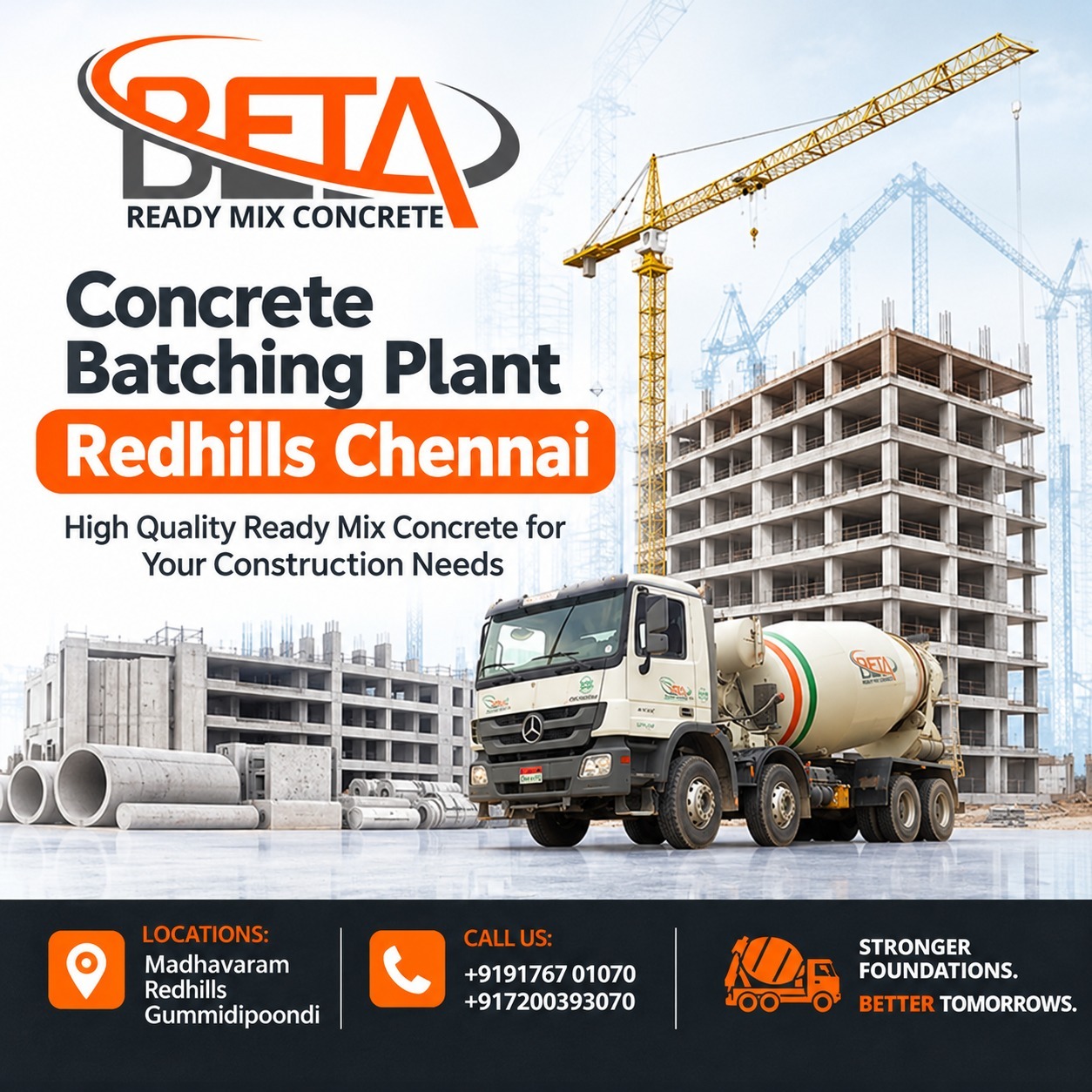
visit-https://betarmc.in/ready-mix-concrete-in-chennai/
Chennai is growing fast. From new apartment towers along OMR and ECR to warehouses near Sriperumbudur and Oragadam, and metro and infrastructure works across the city, the demand for high-quality concrete has never been higher. If you are building a home, a commercial complex or an industrial unit, readymix concrete (RMC) in Chennai is now the preferred choice over site-mixed concrete.
In this guide, we explain what readymix concrete is, why it suits Chennai's conditions, which grades you should use, what affects the price, and how to pick a trustworthy RMC supplier.
What Is Readymix Concrete?
Readymix concrete is concrete that is manufactured in a centralised batching plant under controlled conditions and delivered to your site in a transit mixer, ready to pour. Cement, aggregates, water and admixtures are measured by weight using automated systems, which gives a consistent mix every time.
In India, RMC is typically produced and tested as per IS 456 (plain and reinforced concrete) and IS 4926 (readymixed concrete), with quality checks such as slump tests and cube strength tests.
Why Choose Readymix Concrete in Chennai?
1. Consistent Quality and Strength
Automated batching removes the guesswork of hand-measured site mixing. Every cubic metre has the same proportions, so the strength you specify is the strength you get.
2. Saves Time on Site
Mixing on site needs labour, storage space and time. With RMC, concrete arrives ready, so slabs, columns and foundations are poured faster, which is a big advantage on tight Chennai plots.
3. Cleaner, More Organised Sites
No piles of sand, aggregate and cement bags blocking narrow streets. This also reduces dust and material wastage, which matters in dense neighbourhoods such as T. Nagar, Adyar, Velachery and Anna Nagar.
4. Better Durability for Coastal Conditions
Chennai's humid, coastal climate can speed up reinforcement corrosion. RMC suppliers can adjust mixes using supplementary materials like fly ash or GGBS and use admixtures to improve durability and reduce permeability.
5. Cost Control and Less Wastage
You order only the volume you need, and precise batching reduces cement wastage. Over a full project, this often offsets the higher per-cubic-metre rate compared with site mixing.
Common RMC Grades Used in Chennai
Grade | Typical Use |
M10 / M15 | PCC (plain cement concrete), levelling courses, bedding |
M20 | Residential slabs, beams, columns in low-rise homes |
M25 | Standard for most RCC work: apartments, commercial buildings, foundations |
M30 | Multi-storey buildings, higher load-bearing structures |
M35 / M40 and above | High-rises, bridges, industrial floors, pre-stressed work |
Your structural engineer should always decide the grade based on your design. Never downgrade the grade to save money. Beta ReadyMix Concrete supplies M20, M25 and M30 grade ready mix concrete for residential, commercial and industrial projects.
Types of Readymix Concrete Available
Standard (design mix) concrete: The most common type for general construction.
Pumpable concrete: Designed to be pumped to upper floors, useful for high-rise projects.
Self-compacting concrete (SCC): Flows easily around congested reinforcement without vibration.
Fly ash / GGBS blended concrete: Improves durability and workability and supports sustainable building.
High-strength concrete: For heavy-load and specialised structures.
Retarded concrete: Slows setting time, helpful for long transit or hot-day pours.
What Affects Readymix Concrete Price in Chennai?
Prices change with market conditions, so always request a current written quotation. The main factors are:
Grade of concrete: Higher grades need more cement and better-quality materials.
Cement and aggregate costs: Fluctuations in raw material prices directly affect rates.
Distance from the batching plant: Longer transit means higher delivery cost and more risk to concrete quality.
Admixtures and special mixes: Pumpable, SCC or retarded mixes cost more.
Quantity ordered: Larger volumes usually attract better rates.
Pumping charges: Concrete pumps or boom pumps are usually charged separately.
Timing and site access: Peak demand periods and difficult access can influence charges.
Planning Around Chennai's Weather
The northeast monsoon (roughly October to December) can disrupt pours, while peak summer heat can cause rapid slump loss and cracking. Good planning helps:
Check the weather forecast and keep tarpaulins ready for rain cover.
In hot weather, ask your supplier about retarders and schedule pours for early morning or evening.
Start curing promptly and keep it up for the recommended period.
How to Choose the Best RMC Supplier in Chennai
Not all suppliers are equal. Use this checklist before you book:
Modern batching plant with computerised controls and calibrated equipment.
In-house quality lab and willingness to share cube test reports.
Adequate fleet of transit mixers and pumps, so deliveries are on time.
Plant location close to your site to reduce transit time. Many suppliers operate plants around Ambattur, Guindy, Poonamallee, Sriperumbudur, Siruseri and Tambaram. For example, Beta ReadyMix Concrete runs RMC plants in Redhills, Madhavaram and Thiruverkadu, with on-site delivery across Chennai, including Poonamallee and Avadi.
Experience with projects similar to yours.
Transparent pricing with clear terms on pumping, waiting time and extra charges.
Good references from builders, contractors or engineers. You can see completed projects on the Our Work and Our Customers pages.
Adherence to Indian Standards and proper delivery challans showing mix details and batch time.
Tips for a Smooth Readymix Concrete Delivery
Book early: Confirm your pour date and quantity at least a few days ahead.
Prepare the site: Complete shuttering, reinforcement and cover blocks before the truck arrives.
Plan access: Make sure transit mixers and the pump can reach your site and park safely.
Check the delivery challan: Verify grade, quantity, slump and time of loading.
Do not add extra water: It weakens the concrete. Use admixtures if workability needs to be adjusted.
Take cube samples: Collect cubes during the pour and test at 7 and 28 days.
Cure properly: Good curing is essential for achieving the designed strength.
Frequently Asked Questions (FAQ)
1. What is readymix concrete (RMC)?
Readymix concrete is concrete made in a controlled batching plant and delivered to the construction site in a transit mixer, ready to be poured.
2. Is readymix concrete better than site-mixed concrete?
In most cases, yes. RMC offers consistent quality, faster work, less wastage and better control over strength and durability. Site mixing varies with labour skill and material measurement.
3. Which concrete grade should I use for my house in Chennai?
Most residential buildings use M20 or M25 for slabs, beams and columns, while M10 or M15 is used for PCC. Your structural engineer will confirm the exact grade from the design.
4. How much does readymix concrete cost in Chennai?
The rate depends on the grade, plant distance, quantity, admixtures and pumping needs. Because material prices change often, ask two or three suppliers for current written quotes and compare them like for like. You can also request a quote from Beta ReadyMix Concrete.
5. How is readymix concrete measured and sold?
RMC is sold by the cubic metre (m³). The quantity is calculated from the volume of your slab, beam, column or foundation, with a small allowance for wastage.
6. How long can concrete stay in a transit mixer?
Concrete should generally be placed within about 2 hours of batching, and sooner in hot weather. Retarding admixtures can extend workability when long transit is unavoidable.
7. Can readymix concrete be pumped to upper floors?
Yes. Pumpable mixes are designed for this, and suppliers provide concrete pumps or boom pumps for multi-storey buildings.
8. What is the minimum order for readymix concrete?
Minimum quantities vary by supplier. Many require at least 3 to 6 cubic metres per delivery, though this differs, so confirm when booking.
9. Can I pour readymix concrete during the Chennai monsoon?
Yes, with precautions. Protect fresh concrete from heavy rain using covers, avoid pouring during downpours and make sure surface water is drained before the pour.
10. How do I check the quality of readymix concrete?
Check the delivery challan, perform a slump test on site, take cube samples for 7 and 28 day strength testing and ask your supplier for their batch and test records.
11. How long does concrete take to gain full strength?
Concrete gains roughly 65 to 70 percent of its strength in 7 days and reaches its designed strength at 28 days, provided it is cured properly.
Conclusion
Choosing readymix concrete in Chennai is one of the smartest decisions you can make for any construction project. It delivers consistent strength, saves time, reduces waste and performs better in Chennai's hot, humid and coastal environment. Whether you are laying the foundation of a new home or pouring slabs for a commercial tower, the right RMC grade and a reliable supplier make a lasting difference to the safety and life of your structure.
Before you place an order, confirm the grade with your engineer, compare quotations, verify the supplier's plant and quality records, and plan your pour around site access and weather. Do this, and you will get strong, durable concrete delivered on time.
Ready to start your project? Contact Beta ReadyMix Concrete, a trusted readymix concrete supplier in Chennai, today, share your grade and quantity requirements and get a detailed quotation for your site.