How to Hand Over a Group Meetup Plan When the Organizer Cannot Attend
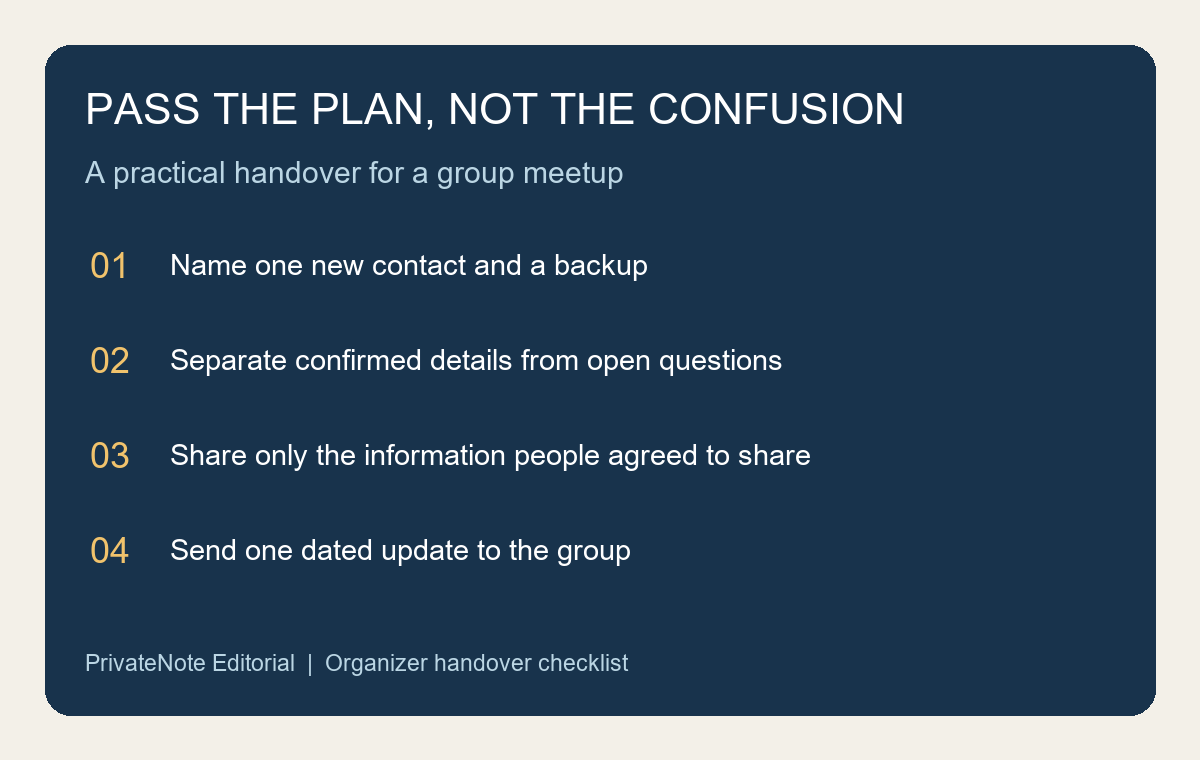
An organizer's absence does not have to leave a singing meetup without a plan. The useful handover is not a forwarded archive of every conversation. It is a short, agreed record that lets another person understand what is confirmed, what remains open, and which decisions they can make. Start by asking someone to take the role rather than announcing that they have inherited it.
Agree on the role before transferring information
Explain what you are asking the replacement organizer to handle. They might only need to greet participants and coordinate questions, or they might be willing to contact the venue. Ask which responsibilities they accept and whether there are times when they will be unavailable. Do not assume that accepting the role also means paying a deposit, covering someone else's costs, or making new commitments.
Tell the group who has agreed to coordinate and when the change takes effect. Give the new organizer a chance to correct the announcement before sending it.
Build a small handover packet
Include the venue's written confirmation, the agreed meeting plan, and the questions that still need answers. For each item, distinguish an actual answer from a suggestion made within the group. Note when a confirmation was received and which booking or arrangement it concerns.
A compact packet can use these headings:
Confirmed: decisions supported by the relevant messages.
Still open: questions, who is checking them, and the next step.
Role limits: decisions the replacement organizer has agreed to handle.
Useful contacts: only the contacts needed for those tasks.
Current version: the date of this handover and any later changes.
Keep the original confirmation available if a summary could lose important conditions. Do not replace an unanswered question with your best guess to make the packet look complete.
Ask how the venue wants a contact change handled
If the booking is associated with your name or contact details, ask the venue how a replacement contact should be introduced. Do not assume the booking can be transferred or that the new organizer can alter it. Obtain the instructions in writing where possible, and let the new organizer see the answer.
Avoid sharing account passwords, payment credentials, or other unnecessary access. If a task depends on something only you can do, identify it explicitly and arrange a different next step rather than passing along sensitive information.
Share the minimum participant information
The replacement organizer may need to know who expects to attend, but not everyone's private reasons for arriving late or requesting an arrangement. Ask participants before passing on personal contact details or sensitive explanations. A practical instruction can often be transferred without the background story behind it.
Use a private channel for information intended only for the organizer. Do not place attendance lists or private messages on a public planning page merely because it is convenient.
Finish with a read-back
Ask the new organizer to describe the remaining tasks in their own words. This can reveal missing information before the meetup begins. Clarify who will answer questions after the handover and whether you will be reachable. Avoid promising availability you cannot provide.
Finally, stop issuing parallel instructions once the agreed handover takes effect. If you learn something important later, send it to the new organizer so the group receives one consistent update.
Written by the operator of PrivateNote, a Korean-language information resource. The linked material may require Korean reading ability. This practical guide does not report a personal visit or verify any venue's booking-transfer procedures, facilities, or services.